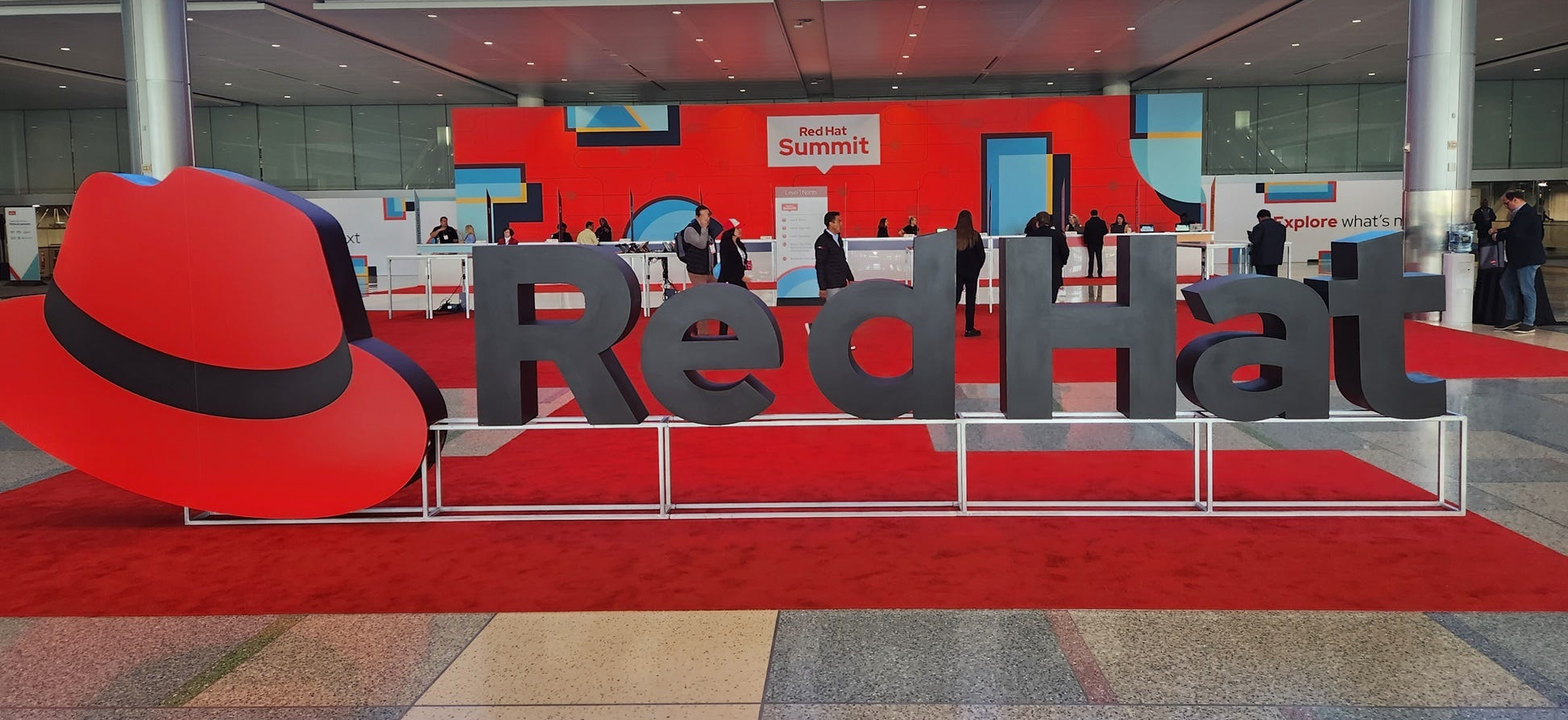
The marketplace continues to face rising demand for application development, and on Day 2 of Red Hat Summit the Linux pioneer outlined several new solutions aimed at keeping pace with rapid, AI‑driven change.
A central pillar of Red Hat’s strategy is delivering extraordinarily long life cycles for mission‑critical applications, an increasingly urgent need as organizations grapple with DRAM shortages and other shifting market conditions.
Gunnar Hellekson, Red Hat’s vice president and GM of the Red Hat Enterprise Linux Business Unit, positioned Red Hat Enterprise Linux (RHEL) as the backbone for organizations balancing rapid innovation with long‑term stability. He described customers being pulled by two opposing forces: the pressure to move at market speed (especially with AI‑driven development) and the requirement for multi‑decade stability for core systems. RHEL’s roadmap is designed to meet both demands, he said.
Leading the Day 2 announcements was RHEL for Oracle Cloud Infrastructure, offering flexible consumption models, committed‑spend drawdowns, and OCI‑specific optimizations. Hellekson also introduced Red Hat Hardened Images, a curated set of hardened, container‑ready components delivered through Red Hat’s SLSA 3 supply chain and available at no cost with RHEL or OpenShift.
Another notable release is Fedora Hummingbird, a fast‑moving, minimal OS built for AI‑accelerated development in containerized and virtualized environments. Produced through the same automated Hummingbird factory as Hardened Images, it targets developers who iterate in days rather than months.
Red Hat also unveiled a developer preview of RHEL on Nvidia DGX Spark, a high‑performance AI developer workstation designed to power the inner development loop and local agentic AI workloads at the edge.
“RHEL for Nvidia is a fast‑moving edition of RHEL optimized specifically to support Nvidia’s high‑performance hardware on Day 0,” Hellekson said.
“Fedora Hummingbird Linux is a separate Linux focused on software builders who natively develop with containers and virtual machines on x86 and ARM. There are initiatives in the Fedora community to improve support for NVIDIA hardware, but this is separate from RHEL for Nvidia,” he added.
Finally, Hellekson announced the RHEL Long‑Life Add‑On, effectively offering “RHEL forever.” The add‑on provides continuous patches and fixes with no predetermined end date. This is being positioned by Hellekson as a direct response to customers requiring predictable, stable infrastructure for decades.
For more news from Red Hat Summit 2026, continue to follow E‑ChannelNews.com.